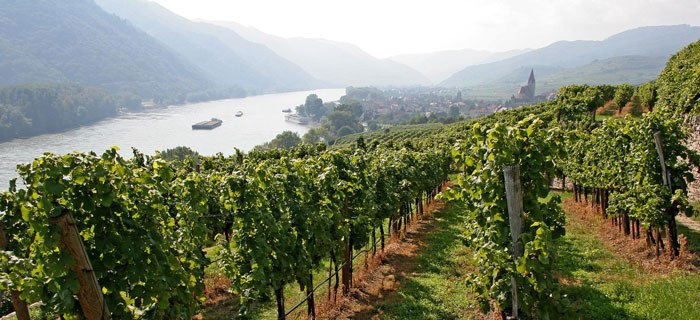
Die Wachau ist jenes berühmte, 30 km lange Donautal zwischen Melk und Krems. Es zählt zu den schönsten Flusstälern der Welt. Die Region ist weltbekannt für ihre Weine von höchster Qualität. Die Donau und die berühmten Steinterrassen prägen das Landschaftsbild der Wachau. Im Jahr 2000 wurde die Wachau zur UNESCO-Weltkulturerberegion ernannt. 2009 folgte die Auszeichnung vom National Geographic Magazine zum „besten historischen Ort weltweit“.
Die Eckpfeiler der Wachau sind die Stifte Göttweig im Osten und Melk im Westen. Diese bedeutenden Bauwerke zählen zu den bekanntesten Sehenswürdigkeiten der Region. Auch das Stift Dürnstein, zahlreiche Schlösser und Burgen sowie Museen und Veranstaltungen bilden ein interessantes Angebot für den kulturinteressierten Besucher.
Die Geschichte der Wachau
Die Wachau war bereits sehr früh besiedelt, davon zeugt die ca. 25 000 Jahre alte Venus von Willendorf. Dabei handelt es sich um eine kleine Statue und Fruchtbarkeitssymbol, welches in Willendorf in der Wachau gefunden wurde. Die Römer brachten den Weinbau um etwa 100 nach Christi in die Region Wachau und noch heute findet man zahlreiche Reste aus der Römerzeit, zum Beispiel im Wachau-Ort Mautern, dem damaligen Favianis. Das Rittergeschlecht der Kuenringer herrschte vom 11. bis 13. Jahrhundert in der Wachau. In dieser Zeit wurden die Burgen Aggstein und Dürnstein erbaut. Beide Burgen, heute Ruinen, sind wichtige Ausflugsziele in der Wachau. Auf der Burg Dürnstein wurde 1192 der englische König Richard Löwenherz gefangen gehalten.
Radfahren und Wandern in der Wachau
Der Donauradweg von Passau nach Wien führt durch die Wachau und so ist diese Region auch bei Radfahrern sehr beliebt. Der Donauradweg wurde auf beiden Seiten der Donau bestens ausgebaut und lädt zu ausgedehnten Touren ein. Auch für Wanderungen ist die Wachau ein beliebtes Ziel. So führt ein Teil des Jakobswegs durch die Region und seit Mai 2010 gibt es den Welterbesteig Wachau, einen 120 km langen Weitwanderweg zu den schönsten Plätzen der Region.
Weinbau in der Wachau
Das milde Klima der Wachau und die fruchtbaren Böden bieten die idealen Voraussetzungen für den Weinbau. Der Wein wird noch genau wie in früheren Zeiten auf den Steinterrassen angebaut und händisch bearbeitet. Die Weinlese im Herbst ist immer ein besonderes Highlight. Es werden in der Wachau vor allem die Sorten Grüner Veltliner und Riesling angebaut. Besonders interessant ist die Entstehung der Weinsorte „Riesling“. Angeblich wurde bereits um 1300 eine Rebe nach dem Ritzlingbach benannt, der zwischen Weißenkirchen und Joching in die Donau fließt. Diese Rieslingrebe kam dann nach Deutschland und von dort nach vielen Jahren wieder zurück in die Wachau.
Veranstaltungen in der Wachau
Das ganze Jahr über gibt es in der Wachau eine Reihe von Veranstaltungen. So locken unter anderem der Wachau-Marathon, der Marillenkirtag in Spitz, das Rieslingfest in Weißenkirchen, die berühmten Sonnwendfeiern, die Wachaufestspiele und vieles mehr unzählige Besucher an.
Kulinarik in der Wachau
Die Wachau gilt als Region für Genießer. Vom urigen Heurigen über gemütliche Gasthöfe bis zu haubenprämierten Restaurant reicht hier das Angebot. Im März findet alljährlich das Wachau Gourmetfestival statt.